Saturday, 7 March 2026

Window Mobiles


First collect materials:

Shapes: Take easy shapes from colouring books, quilt books, online etc. Do not make them complicated but stick to hearts, birds, owls, simple bunny outlines etc. Get the picture to the size you want and cut out or make a template. 

Fabric of your choosing

Interfacing such as foam, fleece or batting. If using batting double it up for better structure. 

Trace the shape onto the foam/batting etc and cut out.

For the fabric: for simple shapes like hearts trace one side only and use a large enough scrap for the opposite side or fold it like shown here. For directional shapes like birds, trace two (one per side) by flipping the template before tracing. If need to add wings etc. do it before going on to the next step. Leave some room between the shapes
Line it all up as follows: Bottom fabric with traced shape good side up if directional like a bird or just a plain or folded piece as shown in the picture. Place fabric with traced shape good side down. Make sure traced shapes line up if they have extras like wings etc. Place foam in the traced lines. If the foam is fusible, you can iron set it onto one of the fabric traced shapes to make it easier. If not use a glue stick to stick it in place.
Sew around on the traced lines, leave a gap for turning, turn right side out, make it look pretty, iron and and stitch or close stitch by machine closed.

Use string to connect the shapes and hang from a small nail or tack from the window

Applique Block - 13 inch


Simple Framed Block


This is a 13 inch block, not a traditional size, but I had leftover strips from a project, the spare fabric was 10 inch so I made them into blocks, the 10 inch squares bring the centre. You can make these blocks into pillows, runners, quilts etc. 

If desired make an appliqué and sew onto the 10 inch square, you can also embroider or just use a print you like, be creative. 

I used:

10 inch square for the centre, (4) 2.5 inch squares for the corners, (2) 2 x 10 inch side strips, (2) 10 x 13 for top & bottom strips.

To make the corners on the 10 inch square: Use 2.5 inch squares to make the corners. draw a line diagonally on the back of the 2.5 inch square, place in the corner of the 10 inch square and sew on the line. 


Trim 1/4 inch away from the newline and flip the triangle back to make the new corner, iron.  


Do this to all 4 corners. 


Not to waste fabric you can sew the cut off triangle 1/4 or 1/8 seam and make a mini half square triangle. See the bottom of the post to see what I do with them. 

Sew a 2 inch by 10 inch strip the sides of the centre square, iron


Sew a 2 inch by 13 inch strip the top and bottom, iron


Block complete. 

You can make the corners larger by using larger squares, add more strips to the sides and bottoms.. have fun. 


 To use up the mini half square triangles, lay them out in any design you wish. I like to make mini star blocks. Sew two hst together to make a flying geese. Put these around a 3.5 inch centre square, add 1.5 inch squares to the corners. I stock pile these and make pillows or use for other smaller projects. 


Happy Sewing!


Crochet Bunting


     Bunting is fun, easy and makes a window feel vintage with not a lot of effort. These ones are a triangle granny square, if you can make a granny square, you can make these!

I used a 4mm hook DK weight cotton yarn

Chain 5, join

Round 1:  Join in yarn. Chain 3 (counts as first DC), 3DC, Ch3, 4 DC, Ch3, 4DC, Ch3. Join in top of Chain 3 in the first set.

Red

Round 2:  Join in yarn. Chain 3 (counts as first DC), 3DC, Ch3, 4 DC. First corner made. Ch1 (4DC, Ch3, 4DC, Ch1) x2. Join in top of Chain 3 in the first set.

Green

Round 3:  Join in yarn. Chain 3 (counts as first DC), 3DC, Ch3, 4 DC, Ch1, (4DC, Ch1, 4DC, Ch3, 4DC, Ch1) x2. Join in top of Chain 3 in the first set.

Cloud

Round 4: Join in yarn. Chain 3 (counts as first DC), 3DC, Ch3, 4 DC, Ch1, (4DC, Ch1, 4DC, Ch1, 4DC, Ch3, 4DC, Ch1) x2. Join in top of Chain 3 in the first set.

Choose one: Denim, Red, Aqua, Beehive, Green, Pink.

Round 5: Join in yarn. Chain 3 (counts as first DC), 3DC, Ch3, 4 DC, Ch1, (4DC, Ch1, 4DC, Ch1, 4DC, Ch1, 4DC, Ch3, 4DC, Ch1) x2. Join in top of Chain 3 in the first set.

Finished. 

Make as many as you like.

For a solid colour triangle, turn work at the end of each round instead of cutting and starting new yarn.

To connect bunting flags, chain stitch and join the flags along the top, leaving desired length of chain stitches at beginning, between the flags and end.

Tulip Runner


Its spring and spring means pretty flowers! Here is how to make a quick and easy runner.

Tulip Blocks: I made 5, you can make as many as you want. Material for each block:

Size: 5 inch x 9 inch

Background (white):
(1) 3.5 inch
(2) 1.5 inch squares
(4) 2.5 inch squares
Draw a diagonal line on all background squares.

Tulip:
(1) 3.5 inch
(1) 2.5 X 5 inch

Leaf (green):
(2) 2.5 x 5 inch

Stem (green):
(1) 1.5 x 5 inch

Sashing: (6) 2 inch x 9 inch Strips in background (I used off white). (2) Strips of 2 inch background as long as your finished runner for top and bottom boarders. 

Backing: as big as your finished runner. I used less then 1/2 yard.

Place the 3.5 white square on top of the 3.5 inch tulip square. Sew 1/4 inch away from the diagonal line. Repeat on the other side of the line. Cut on the line to make 2 half square triangles.

Place the two half square triangles side by side, make sure the bottom points are in line with each other, fold over top the other and sew the center seam.

The top of the tulip will look like this

Place the 1.5 inch white squares on top of the bottom corners of the 2.5x5 inch tulip piece. Sew directly on the line. Cut 1/4 inch away from the sewn line and fold the corners back.
Place the 2.5 inch white squares on the 2.5x5 inch leaf piece as shown. sew directly on the line, cut 1/4 inch away from the sewn line and fold back the corners.

Tulip top: Sew the two pieces together as shown.
Leave/stem: Set up as shown and sew together.
Last sew the top tulip flower to the bottom stem/leaf section. They may not match perfectly together, center the center of the tulip flower in the center of the stem, this will center it all. Sew the sections together
Trim to 5 inch wide / 9 inch long.

Sew the 2x9 background strips in between each tulip and the ends. Sew the top and bottom strips on. 

Place on backing with good side down, sew all the way around leaving a turning gap. Turn right sides out, iron, sew close to the edge all the way around. Add trim like ricrac if desired. 

Videos:

Tulip Runner: https://youtu.be/6JKLDEHzNiE

Tulip block: https://youtu.be/85R0sKtqImE

No Boarder backing: https://youtu.be/PYDMUE8-e14

Have fun! 

Regent Street Block

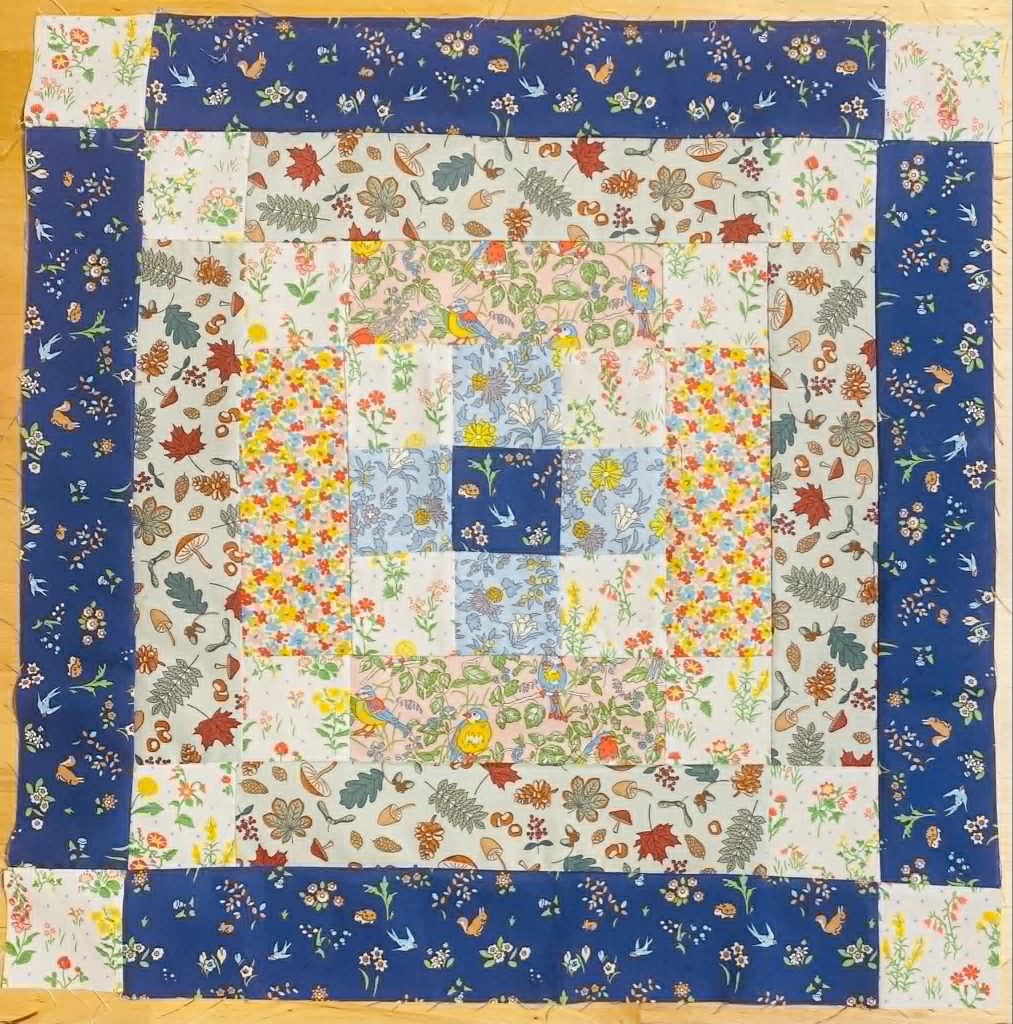
 This pillow is made with the Woodland Walk Collection by Liberty Of London, finishes at 18 inch Square. and uses 2.5 inch strips. 

 This is a great block for small pieces in your stash and can be made into quilt blocks, pillows etc.

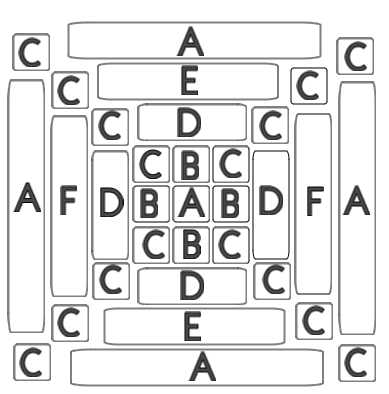
The Chart:

B: (4) 2.5 inch square

C: (16) 2.5 inch square

D: (4) 2.5 x 6.5 inch

E: (2) 2.5 x 10.5 inch

F: (2) 2.5 x 10.5 inch

To Sew:

Make the 9 patch in the center:

Sew together 2 sets of CBC and 1 set BAB.

Sew to form the 9 patch center.  

Sew 2 sets of CDC

Sew 2 D strips to the side of the 9 patch.

Sew the two CDC strips to the top & Bottom

Sew 2 sets of CEC

Sew 2 F strips to the side of the 9 patch.

Sew the two CEC strips to the top & Bottom

Sew 2 sets of CAC

Sew 2 A strips to the side of the 9 patch.

Sew the two CAC strips to the top & Bottom

Get creative and use more or less then 6 prints

Have fun sewing! Vall

Scappy Applique Block

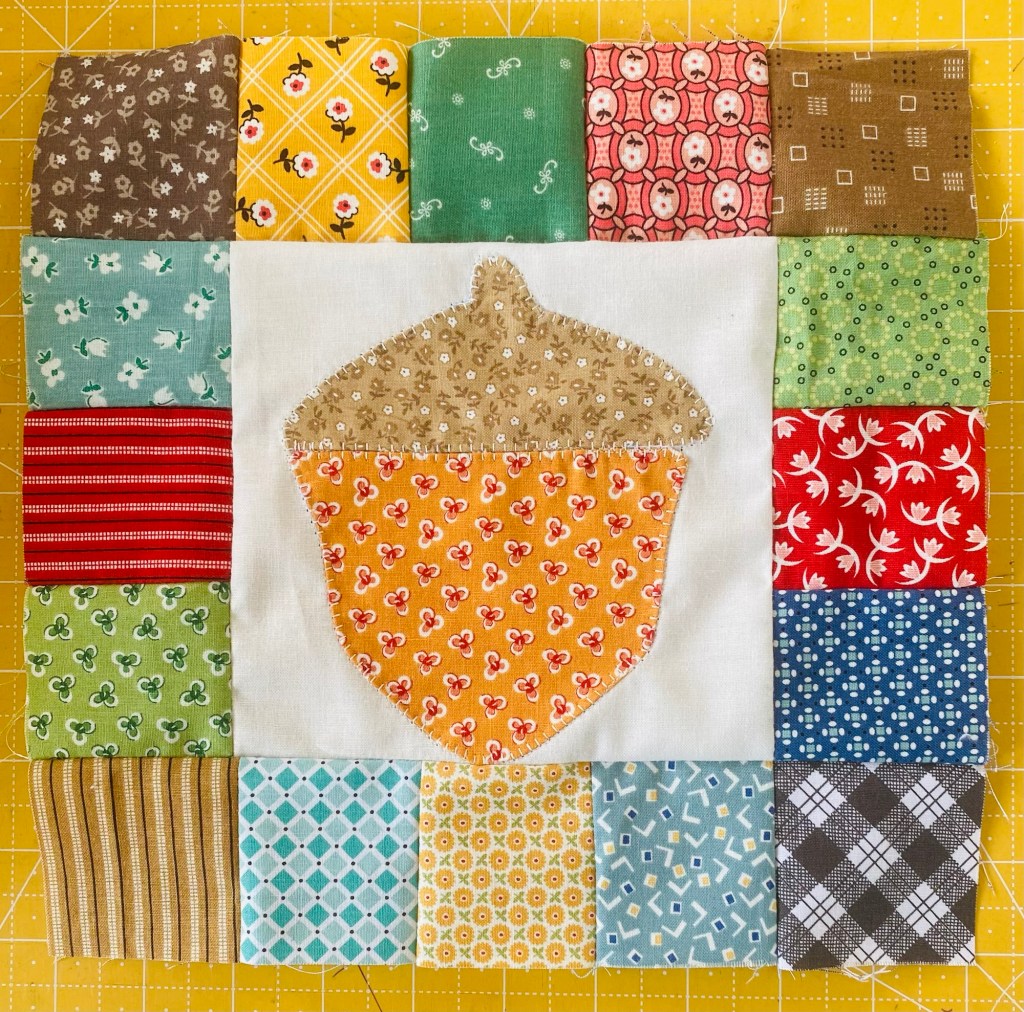
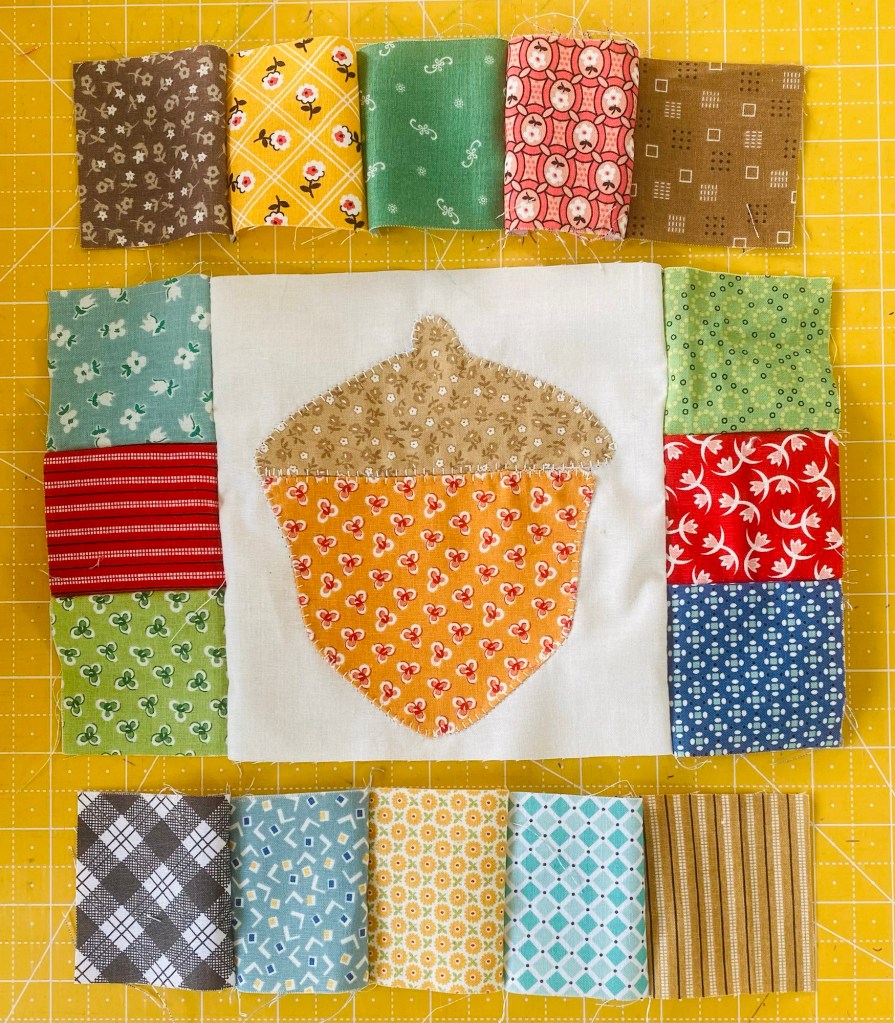
How to make a fun 10 inch patchwork block


You will need:

6.5 inch square for the centre 

16. 2.5 inch squares for the sides

An appliqué of your choice for the centre 

First using your favourite appliqué method, sew the appliqué to the center of the 6.5 inch square. You can also do an embroidery.

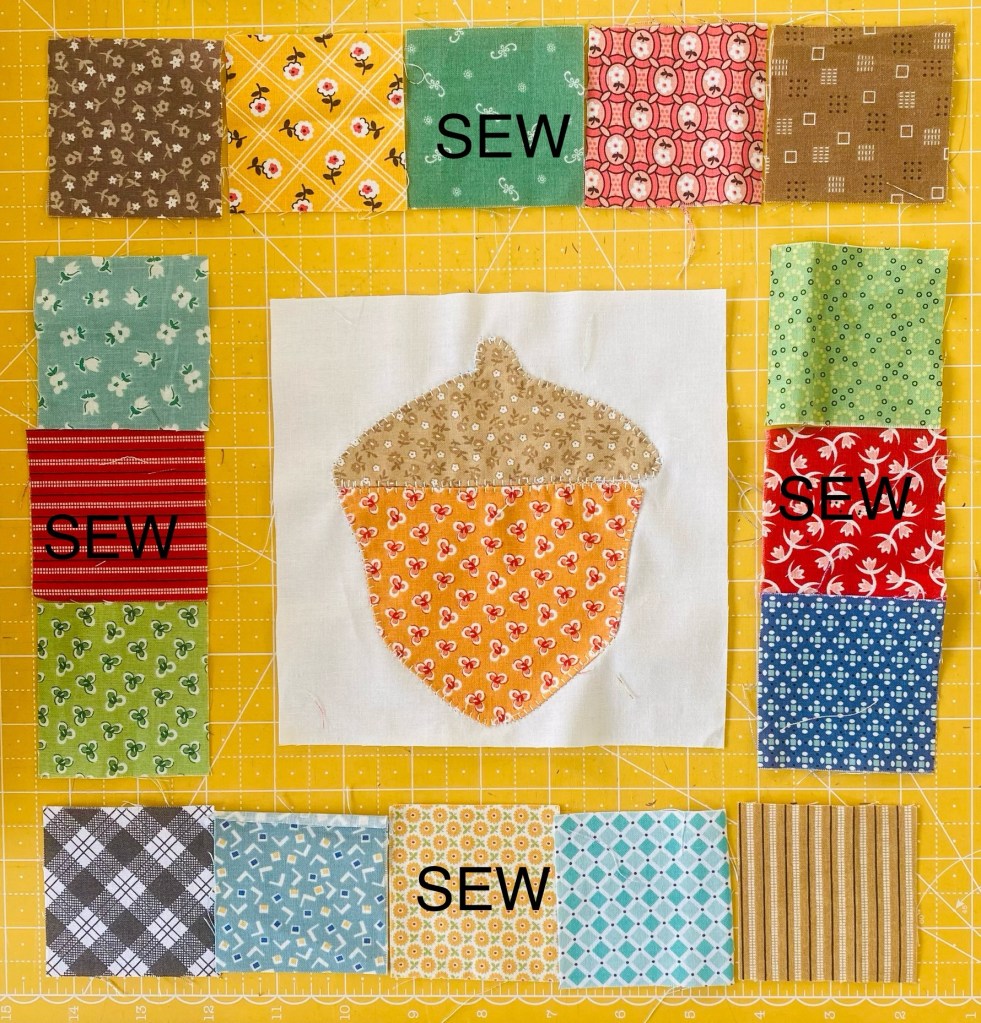
Place the 2.5 blocks around the 6.5 inch square so there are three along each side and one at each corner

Sew the sections laid out in the above picture
Sew the side strips to the centre block. Then sew the top & bottom strips

The blocks done! Use it as a quilt block, pot holder, make several and put together as a runner or quilt.

Happy sewing! Vall

Log Cabin Block - 11 inch

 I love making scrappy log cabin blocks. They can be used on their own as pot holders, mug mats or pillows, or made into quilts. 

Log cabin blocks are very versatile and y to play with. They start with a centre and work around the centre with strips. You can start on the top, side or bottom, you can use the same width strips or strips of different widths. This one is a pretty standard. 

Before you ask why the letters for the strips are not in order, the program I use sets the letters, not me.. 

F: 3.5 inch square
D: 2.5 x 3.5 strip
E: 2.5 x 5.5 inch strip (need 2)
B: 2.5 x 7.5 inch strip (need 2)
C: 2.5 x 9.5 inch strip (need 2)
A: 2.5 x 11.5 inch strip
Sew D onto F
Sew E to the bottom
Sew E to the side 
Sew B to the top
Sew B to the side
Sew C to the bottom
Sew C to the side
Sew A on the top
Finished. 

You can keep going and make it bigger if you would like. 

Make sure to iron after sewing each strip and use a 1/4 inch foot. 

Have fun making these into quilts, pillows, pot holders etc.